
Respiratory Steam: A Comforting Citrus and Herbal Practice
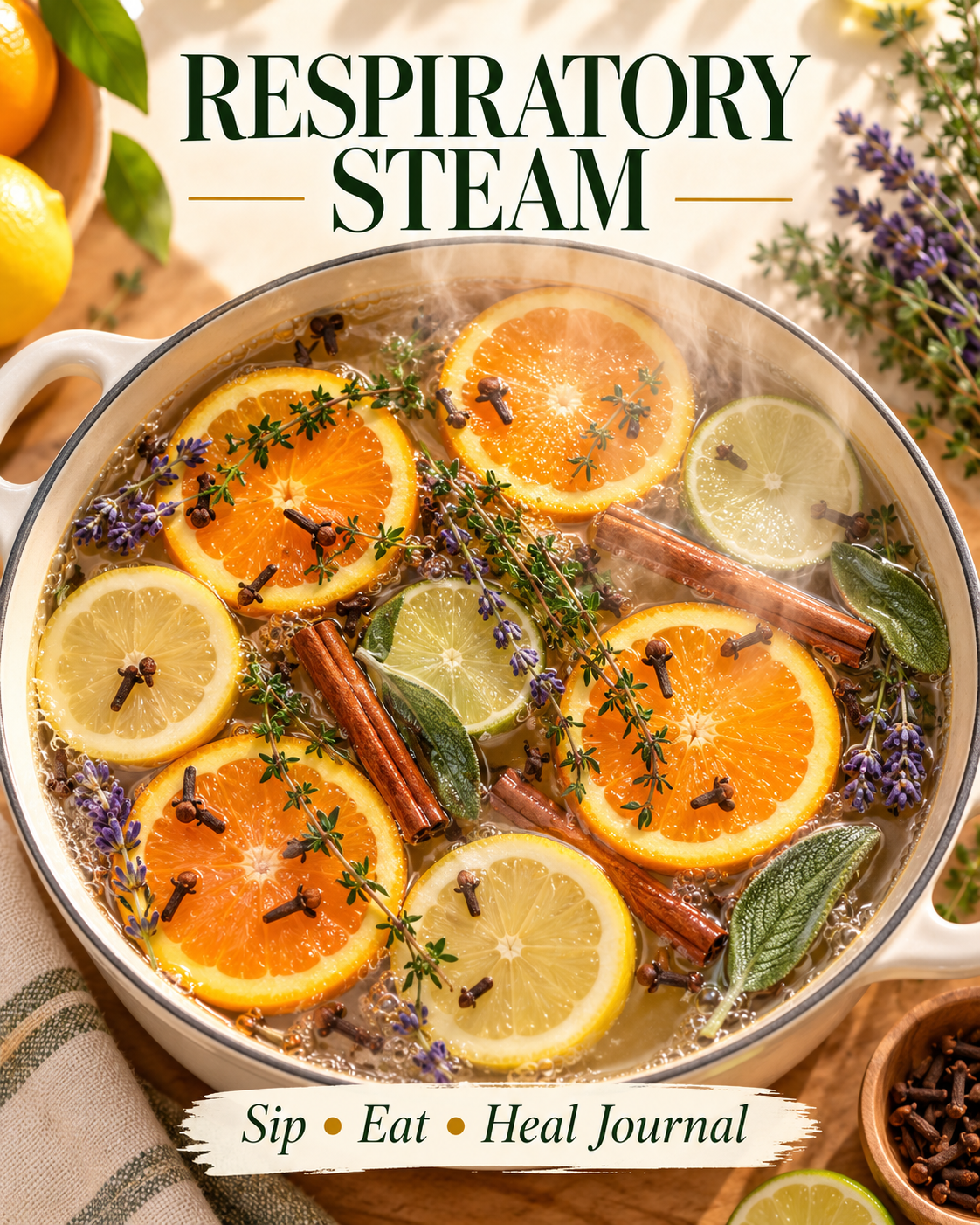
There is something deeply comforting about the aroma of citrus, herbs, and warming spices filling the home—especially during cold, allergy, and respiratory season.
I first began making my respiratory steam years ago using fresh citrus, cinnamon, cloves, eucalyptus, peppermint, and other aromatic herbs. As the ingredients gently warm, they release a fresh, soothing fragrance that can make the air feel more comfortable when you are stuffy or simply need a moment to slow down and breathe.
This is a wellness ritual for temporary comfort—not a treatment or cure for an infection or respiratory condition.
Ingredients
1 orange, sliced
1 lemon, sliced
1 lime, sliced
3–4 cinnamon sticks
8–10 whole cloves
A small amount of dried lavender, thyme, or sage
Spring or distilled water
Optional: a product specifically labeled and formulated for vapor or inhalation use
How to Prepare It
Place the sliced citrus, cinnamon sticks, cloves, and dried herbs into a large pot.
Cover the ingredients generously with water and bring the mixture to a gentle boil. Reduce the heat and allow it to simmer uncovered so the aroma can circulate throughout the room.
Remain nearby, monitor the water level, and never leave a simmering pot unattended. Add more water as needed and turn off the heat when you are finished.
Do not lean directly over the pot or cover your head with a towel. Hot water and concentrated steam can cause serious facial, airway, and skin burns.
What Can Respiratory Steam Actually Do?
Warm moisture and aromatic ingredients may temporarily make dry nasal passages feel more comfortable. The fragrance can also create a calming sensory experience that encourages you to pause, rest, and breathe more slowly.
However, steam has not been proven to cure a cold, flu, COVID-19, sinus infection, or other respiratory illness. It should never replace medical evaluation, prescribed medication, hydration, or appropriate rest.
Important Essential-Oil and Menthol Safety
My original recipe included menthol crystals and eucalyptus and peppermint essential oils. I now recommend much more caution with concentrated aromatic products.
Menthol crystals and essential oils are extremely concentrated. Excessive inhalation can irritate the eyes, nose, throat, and lungs and may cause coughing or difficulty breathing. Eucalyptus and other essential oils can also be poisonous if swallowed.
Only use a product that is specifically labeled for inhalation or vapor use, and follow its directions exactly. Never estimate the amount, add concentrated oils casually, or assume that more will work better.
Stop immediately and move into fresh air if you experience burning, coughing, wheezing, dizziness, shortness of breath, or worsening symptoms.
A Special Warning for Children
Children should never inhale steam from a bowl or pot of hot water. This can cause serious scalding injuries. Concentrated menthol, eucalyptus, and peppermint products may also irritate a child’s airways and may not be appropriate for their age.
For children, speak with their pediatrician before using essential oils or mentholated products. A clean cool-mist humidifier or the moisture from a warm shower is generally a safer option because there is less risk of burns.
When to Seek Medical Care
Contact a healthcare professional if symptoms are persistent, worsening, or accompanied by:
Difficulty breathing or shortness of breath
Chest pain
Bluish or gray lips
Confusion or unusual drowsiness
Dehydration
A high or persistent fever
Wheezing or severe coughing
Symptoms that improve and then become worse again
Respiratory steam can be a comforting part of caring for yourself, but listening to your body and knowing when you need medical support are equally important.
Read the Stars • Heal the Body • Nourish the Soul
Disclaimer: This article is provided for educational and wellness purposes only. It is not medical advice and is not intended to diagnose, treat, cure, or prevent any disease. Consult a qualified healthcare professional before using essential oils, concentrated menthol, or herbal preparations—especially if you are pregnant, breastfeeding, managing asthma or another respiratory condition, taking medication, or caring for a child.
Sources